Prioritizing taxiway crack sealing in a pavement management plan
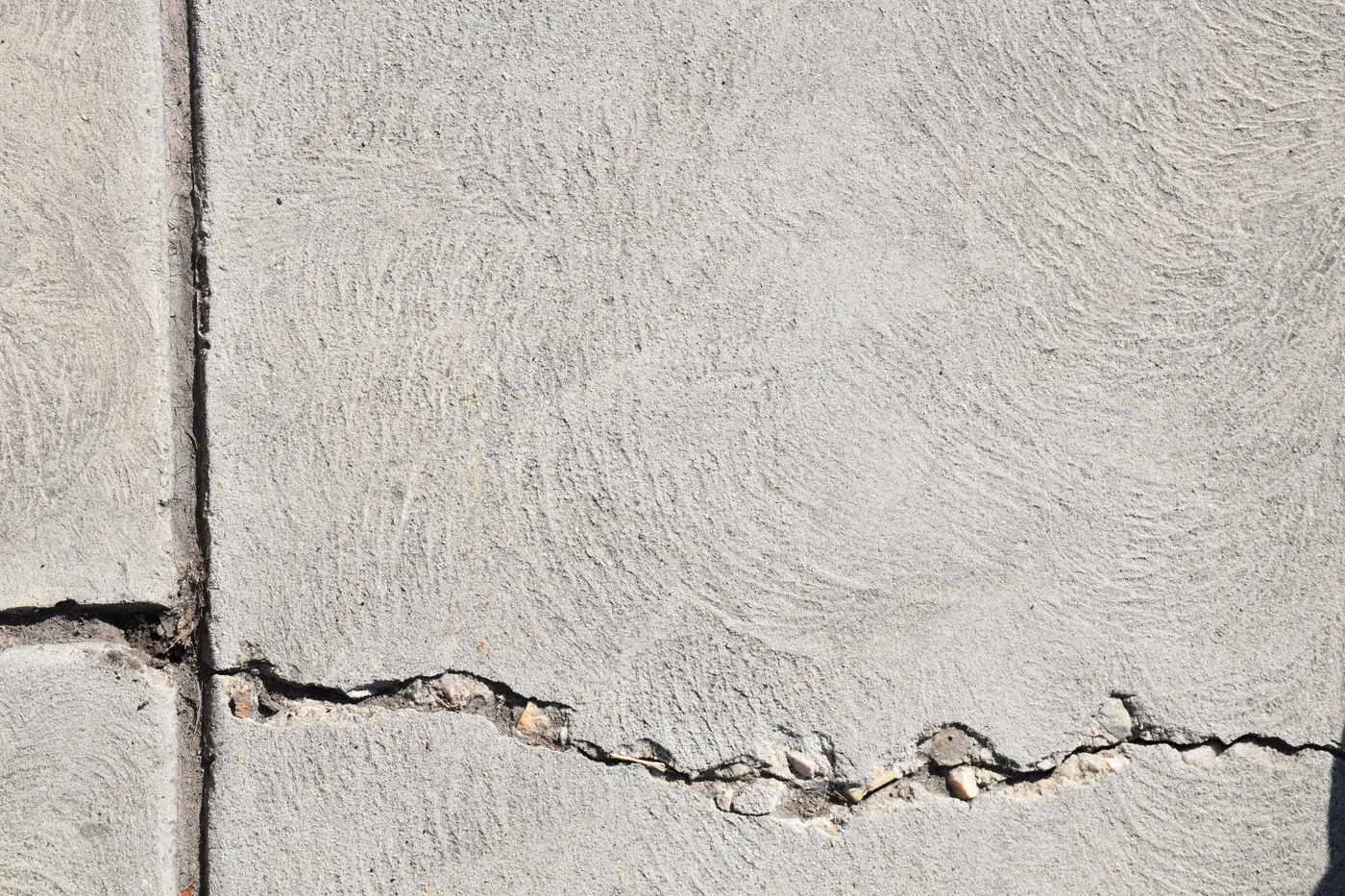
If crack sealing shows up on your pavement management plan as a single line item, "seal cracks, taxiways, FY26," you're already behind. Not every crack on the field deserves the same truck roll. Some will sit stable for three more seasons. Others are letting water into a base course that's one freeze-thaw cycle from a spall. Ranking those cracks by what's happening underneath, and scheduling the worst ones first, is the real work.
Separate distress type from distress count
A PCI report hands you a number per section, but the number flattens everything into one score. A taxiway segment with widespread, tight longitudinal cracking in the center third can read the same PCI as a segment with a handful of transverse cracks working their way across a load-bearing joint near a hold line. Those are not the same repair.
Longitudinal cracking away from wheel paths is often cosmetic for a season or two. Transverse cracking that crosses a joint, especially one near a runway-taxiway intersection or a hold position where aircraft sit and pivot, is a different animal: it's a path for water and a stress riser right where loading concentrates. If your pavement management plan priorities are built off PCI alone, you'll under-rank the second case every time.
Weight by what the crack is doing to the structure underneath
Surface cracking is a symptom. The question for a taxiway crack sealing schedule is whether that symptom points at something progressing underneath: moisture working into the base, a joint seal that's already failed and is letting fines pump out, edge raveling that's accelerating because the sealant gave up two winters ago. Cracks tied to a known drainage problem or a joint with a documented history of spalling move up the list regardless of how they score on a visual index. Cracks sitting in a low-traffic apron tie-in with no drainage issue can wait.
This is where joint distress mapping earns its keep. A single-point PCI walk tells you condition at one moment. A record of how individual joints and crack lines have moved year over year tells you rate of change, which is the input a prioritization model actually needs. A joint that opened 2mm last year and another 3mm this year is telling you something a snapshot inspection can't.
Build the sealing schedule around when you can get a crew out there
On most fields, airfield access is the binding constraint on a crack sealing schedule, more than budget. Crews need a closure window long enough to clean, rout, and seal, plus cure time before the taxiway goes back into service. Where every closure is a negotiation with ops and a hit to taxi routing, work often goes to whichever sections line up with an available window rather than the ones that most need it.
That's a scheduling problem as much as a pavement problem. If your condition data only gets refreshed when a full walking survey can be squeezed into a rare multi-hour closure, your priority list is working off data that might be a year or two stale by the time a crew shows up. An annual read of joint and crack condition that doesn't require shutting the taxiway down keeps the priority list current enough to drive next season's work plan, rather than confirm decisions that were already made.
A rough order of operations
Pull transverse cracks crossing joints near high-load areas first. Flag anything with a documented moisture or base issue behind it. Compare this year's reading against last year's data where you have it, since rate of change matters more than a single score. Then fit the remaining budget to whatever closure windows ops will give you, working down the list rather than sideways across convenient sections.
Pavement Survey runs that annual joint and crack read as an overhead pass, so you get year-over-year change-detection without burning a closure window just to walk the pavement. Worth a look if your current survey cycle is the bottleneck on your crack sealing schedule.