What is a movement area, and why closing one costs more than the survey
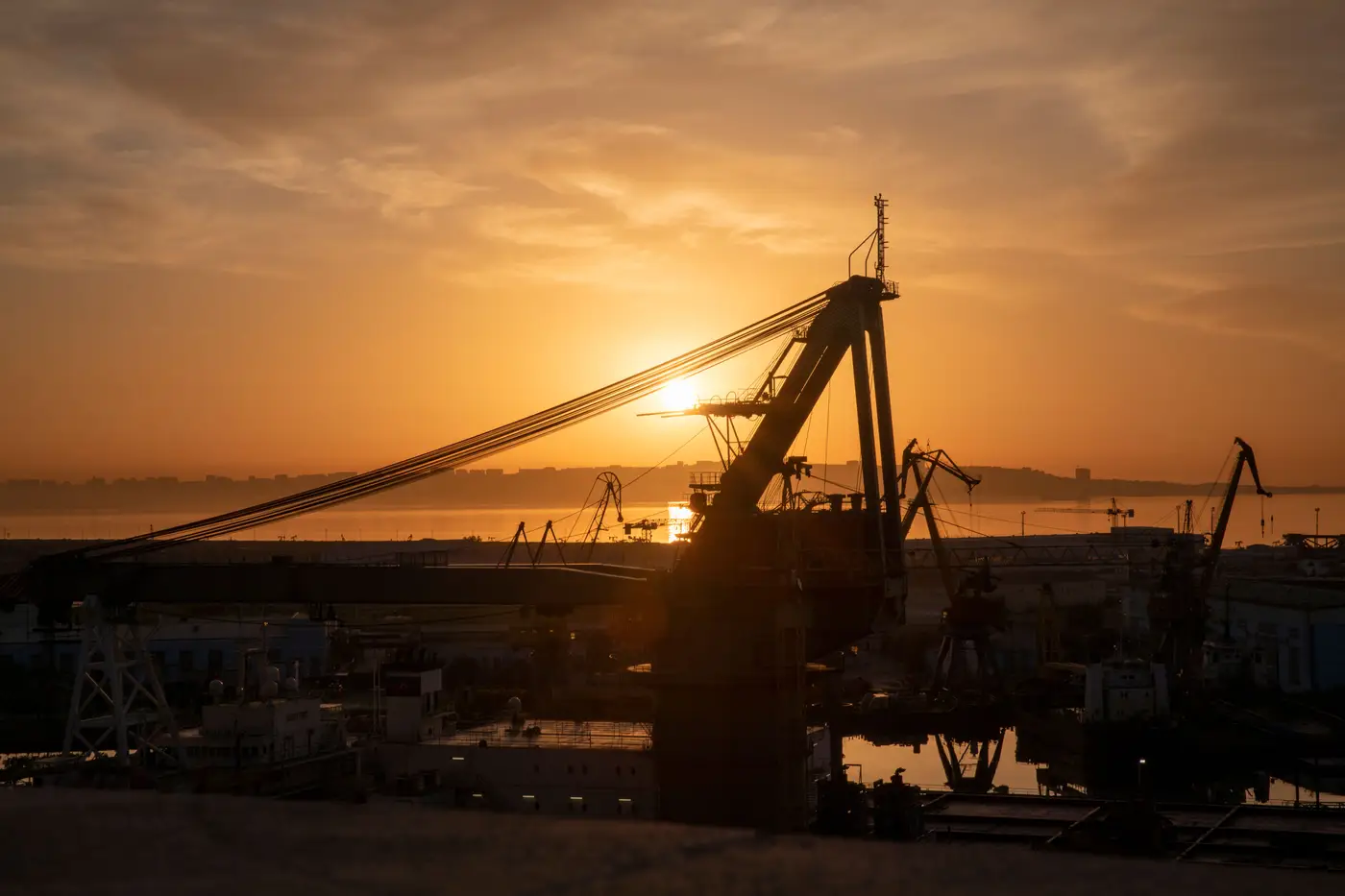
If you work airside, you already know the term, but it's worth pinning down for anyone new to scheduling: a movement area is the runways, taxiways, and any apron or yard pavement under air traffic control or ground control, as opposed to the non-movement apron where ground crews work without a clearance. At a port, the equivalent is the paved yard and roadways where container handlers and straddle carriers operate under terminal control. The common thread is that nothing rolls across that pavement without someone's sign-off, and that sign-off is exactly what makes a pavement survey expensive to schedule.
A walking or wheeled pavement condition survey needs people and equipment physically on the slab, measuring joint spalling, cracking, and rutting foot by foot. That's fine on a taxiway apron at 2 a.m. with nothing moving. It is not fine on a runway that handles arrivals every eight minutes, or a container yard running three shifts. So the survey can't just happen. It has to be scheduled as a closure, and the closure is where the budget goes.
What a closure actually costs
A NOTAM for a runway closure doesn't just block the runway. It forces traffic onto a secondary runway or a different configuration, which usually means lower arrival rates, holding patterns, and in bad weather, diversions. Airlines absorb some of that as delay cost, but the airport absorbs it too, in landing fee credits, in gate reshuffles, in the ops team fielding calls from carriers asking why their 6 a.m. bank got pushed. None of that shows up as a line item called "survey cost," but it's real money, and it's the reason a five-hour window for crack mapping on a single runway can take six months of coordination to get approved.
Ports have their own version. Closing a berth-adjacent yard block for a walking survey means rerouting straddle carriers around the closed cells, which slows every move in that zone, not just the ones that would have crossed the closed pavement. Terminal operators measure that in moves-per-hour lost across the shift, and it adds up faster than the inspection crew's day rate.
The other cost is the one nobody puts in the budget line: survey windows get pushed. A closure that competes with a scheduled maintenance window, a charter season, or a vessel call gets bumped, and the pavement survey that was supposed to happen quarterly slips to annual, or to "whenever we can find a gap." Joint distress doesn't wait for a gap. It keeps opening, and by the time the survey finally happens, the pavement maintenance work it was supposed to scope is bigger and more expensive than it would have been.
Why the closure, not the survey, is the bottleneck
None of this is about the inspection itself being slow or hard. A crew that's cleared onto a closed runway can usually finish the walk in a few hours. The bottleneck is entirely upstream of that: getting the airspace or the yard block cleared in the first place, at a time that doesn't collide with scheduled traffic, and getting every stakeholder, from the tower to the airline ops desk to the terminal scheduler, to agree on the window.
That's the gap Pavement Survey was built around: an annual overhead read of the movement area, fine enough to pick up joint distress and surface degradation, run as a pass over live operations rather than a ground walk that needs the pavement cleared first. It doesn't replace a full engineering-grade pavement management inspection when you need one, but for the yearly condition read that currently means negotiating a closure window months in advance, it means the survey stops competing with your traffic schedule for a slot.
If you're the one who has to go ask for that NOTAM every year, it might be worth seeing what the pass looks like without the closure attached to it.